
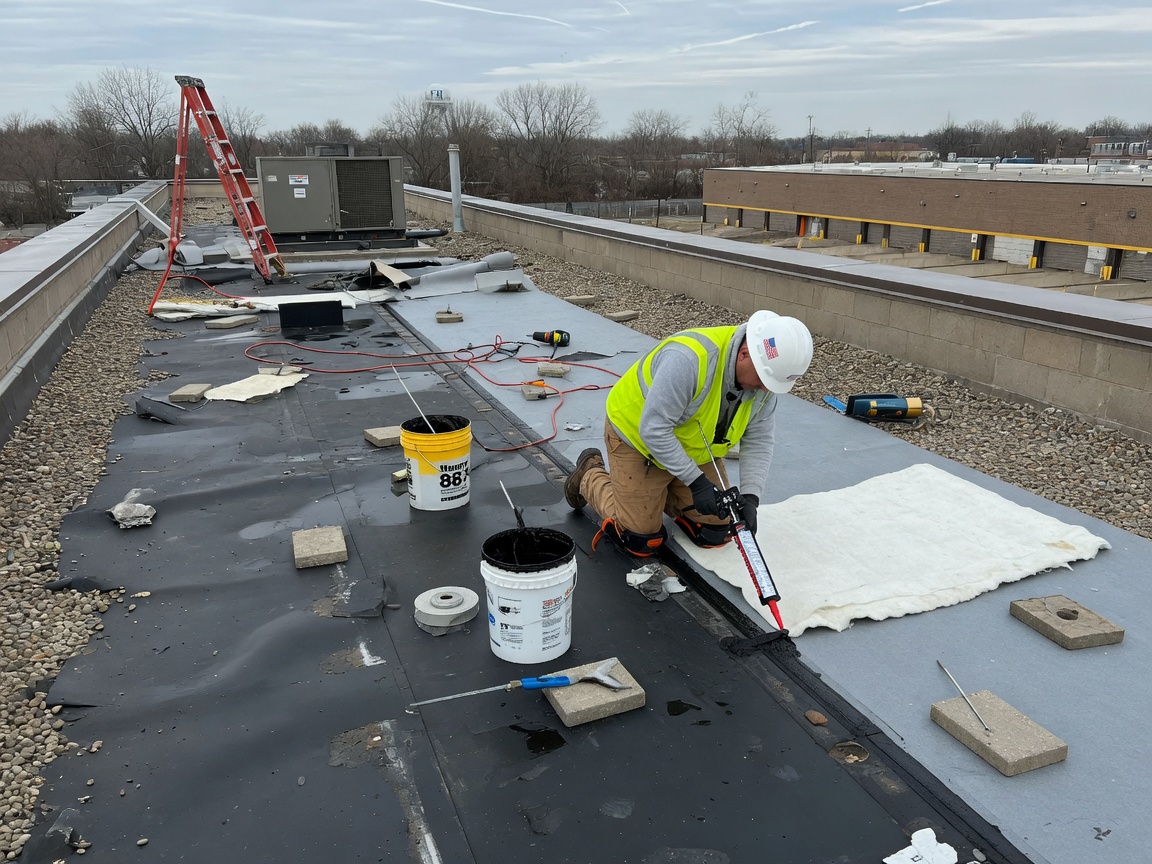
Fort Wayne's humid continental climate brings hot summers that soften modified bitumen and EPDM membranes followed by repeated freeze-thaw cycles that open seams and split flashings. Commercial buildings in Downtown and West Central often date to the early 1900s with original gravel-surfaced roofs that now sit under multiple layers; adding another coating without removing wet insulation leads to trapped moisture and deck rot. We inspect for ponding near HVAC curbs and parapets, then cut out saturated sections before installing new tapered insulation to restore positive drainage.
Allen County code requires commercial roof work to meet current energy codes when more than 25 percent of the roof is replaced, so we document existing R-values and coordinate with the building department on Allen County permits. Near the Lincoln Museum and Promenade Park, wind-driven rain from the St. Marys River corridor forces us to pay extra attention to counterflashing on masonry walls that have shifted over decades. In New Haven and Huntington, lighter industrial buildings often use single-ply systems that fail at the base of rooftop units when vibration loosens fasteners.
We carry only manufacturer-approved adhesives and fasteners rated for -20 °F because standard products crack during January cold snaps. Edge cases include skylight curbs that were never properly tied into the vapor barrier and abandoned penetrations from old exhaust fans that now leak into tenant spaces below. Every repair includes a moisture scan and core samples so the owner sees exactly where water has traveled before we close the job.
Technician insight
In Fort Wayne the thing that catches most people out with commercial flat roof repair is how quickly water travels laterally under multiple roof layers on pre-1950 buildings in West Central and Downtown; one small seam failure can wet insulation fifty feet away before anyone notices ceiling stains.
HVAC curb leak on North Anthony commercial building
Water was entering around a 25-year-old rooftop unit curb on a single-story office building. Core samples showed wet insulation extending eight feet from the curb into the field. We removed the saturated section, installed new tapered insulation to the drain, and welded a new 60-mil TPO target patch with reinforced flashing. The leak stopped and the owner avoided replacing the entire 8,000 sq ft roof.
Commercial Flat Roof Repair Services We Offer
✓Membrane Patching and Seam Repair
Cut out failed sections of EPDM or TPO and weld in new material with manufacturer seam tape so water cannot migrate under the existing roof.
✓Drain and Scupper Clearing
Remove debris and ice dams from internal drains and external scuppers that back up during spring melt in Downtown commercial blocks.
✓Flashing and Counterflashing Replacement
Replace deteriorated metal and membrane flashings at parapets and HVAC curbs common on older West Central and Lakeside buildings.
✓Coating Restoration
Apply elastomeric or acrylic coating over existing modified bitumen to extend service life without a full tear-off when the substrate is still sound.
✓Wet Insulation Removal
Locate and replace saturated insulation boards after infrared scans so new membrane does not trap moisture that will freeze again next winter.
✓Emergency Leak Response
Provide same-day temporary patches and water extraction for active leaks affecting inventory or tenant operations in Allen County commercial properties.
Commercial Flat Roof Repair Cost in Fort Wayne, IN
| Service | Typical Range | What Affects It |
|---|---|---|
| Minor seam and flashing repair | $450–$900 | Single location under 100 sq ft on accessible roof |
| Wet insulation cut-out and patch | $1,200–$2,800 | Per 200 sq ft section including new tapered boards |
| Full coating restoration | $2.50–$4.00 per sq ft | Depends on existing surface prep and number of coats |
| Drain and scupper rebuild | $650–$1,400 | Includes new lead or membrane insert and clamping ring |
Ranges are typical for Fort Wayne, IN and confirmed with an exact written quote before any work starts.
How it works
- 1
On-Site Assessment
We arrive at the Fort Wayne address, walk the roof, and perform moisture scans plus core cuts to map wet areas before quoting.
- 2
Detailed Scope and Quote
Written scope lists every membrane section, flashing detail, and insulation replacement so there are no surprises after work begins.
- 3
Repair Execution
Remove wet materials, install new tapered insulation where needed, weld seams, and flash all penetrations to current manufacturer standards.
- 4
Final Walk and Documentation
Owner or property manager joins us for a final inspection; we provide photos, moisture readings, and a maintenance checklist.
Pricing
Upfront written quotes after inspection; price varies by roof access, number of layers, and extent of wet insulation.